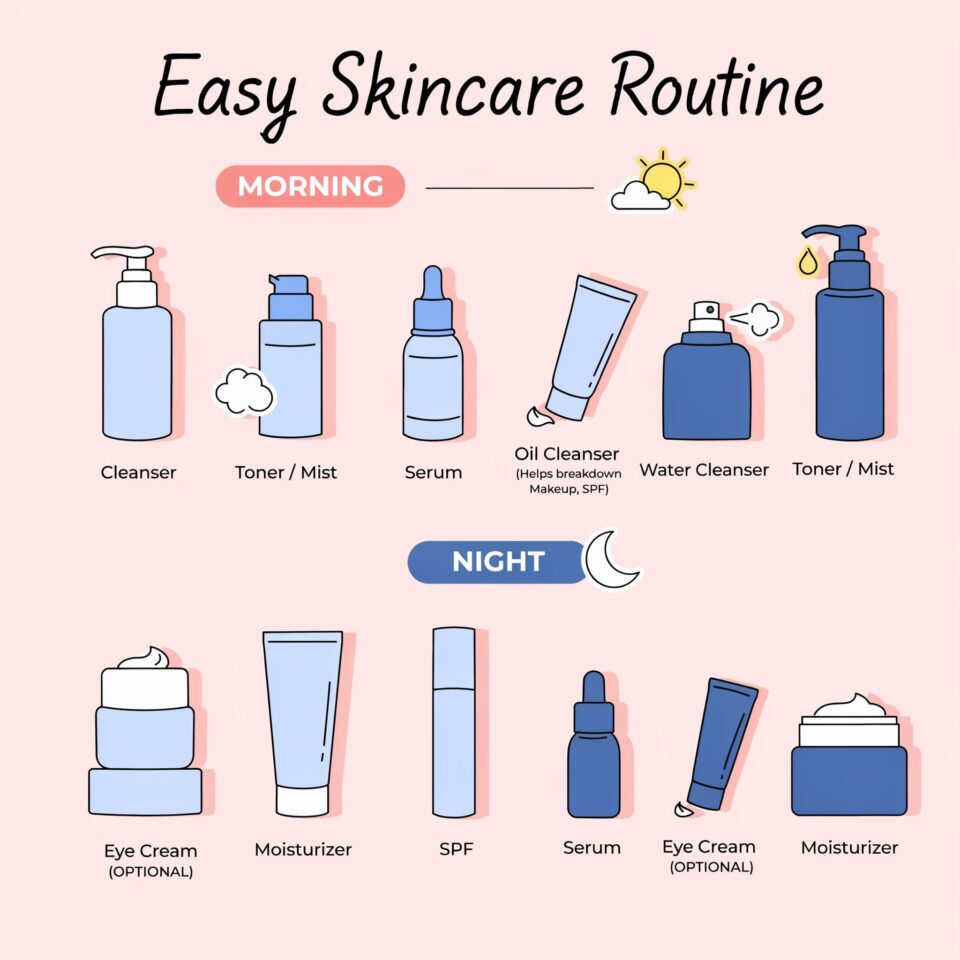
If you have acne-prone skin, you know the frustration of breakouts that never seem to settle. The right skincare routine for acne-prone skin is not about harsh stripping or aggressive scrubbing. It is about consistent, gentle care that clears breakouts while keeping your skin barrier healthy. Over the years, I have tested countless products and routines, and the approach that works best always comes down to two things: balance and patience. Here is a practical, step by step guide to building a daily flow that actually reduces flare ups without leaving your skin red or dry.
Start with a Gentle Cleanser That Respects Your Skin Barrier
Many people with acne think they need a foaming, stripping cleanser to feel clean. In reality, that approach often backfires. Harsh cleansers wipe out protective oils, which signals your skin to produce even more sebum. Instead, choose a gentle, non foaming cleanser with ingredients like aloe vera, green tea, or glycerin. Look for a pH balanced formula around 5.5. This keeps your acid mantle intact and helps prevent irritation that can worsen breakouts.
Wash your face twice a day: once in the morning and once in the evening. Use lukewarm water. Hot water inflames acne and cold water does not dissolve excess oil. Massage the cleanser gently with your fingertips for about 30 seconds. Rinse and pat dry with a soft towel. Do not rub. This one change alone reduces redness and helps your skin heal faster.
Why Non Comedogenic Moisturizer Matters Every Day
Even oily, acne-prone skin needs moisture. Skipping moisturizer actually makes breakouts worse because dehydrated skin produces more oil to compensate. A non comedogenic moisturizer is specially formulated not to clog pores. Look for gel based or lotion textures that contain humectants like hyaluronic acid or niacinamide. Avoid heavy creams with coconut oil, shea butter, or cocoa butter since these are more likely to cause congestion.
Apply moisturizer on damp skin after cleansing. This locks in hydration and creates a protective layer. For daytime, choose a lightweight formula that absorbs quickly. For nighttime, you can use a slightly richer version, but always check the label for the “non comedogenic” claim. I personally love a simple gel moisturizer with ceramides. It keeps my skin calm without any greasy residue.
Use Targeted Treatments Like Salicylic Acid Strategically
Salicylic acid is a beta hydroxy acid (BHA) that penetrates deep into pores to dissolve excess sebum and dead skin cells. It is one of the most effective ingredients for acne-prone skin. But more is not better. Start with a 0.5% to 2% concentration and use it only once a day or every other day. Apply it after cleansing and before moisturizer. Let it sit for 30 seconds before moving to the next step.
Never use salicylic acid with other strong actives like benzoyl peroxide or retinol in the same routine unless directed by a dermatologist. That combination can cause severe irritation. Instead, rotate treatments. For example, use salicylic acid in the morning and a moisturizing niacinamide serum at night. If you notice stinging or peeling, cut back to two or three times per week. Consistency matters more than frequency.
- Pick a leave on treatment rather than a wash off cleanser. Leave on formulas give the acid time to work.
- Patch test any new product on your jawline for three days before putting it all over your face.
- Do not combine with physical scrubs. Exfoliating beads will just tear your skin and spread bacteria.
Build a Simple Morning Routine That Protects and Prevents
Your morning routine should be short, calming, and focused on protection. Start with a gentle cleanser or even just a splash of water if your skin is dry. Then apply a lightweight non comedogenic moisturizer. After that, the most important step for acne-prone skin is a broad spectrum SPF 30 or higher. Many breakout fighting ingredients like salicylic acid make your skin more sensitive to the sun. Sun exposure darkens hyperpigmentation spots and can aggravate inflammation.
Choose a mineral sunscreen with zinc oxide or titanium dioxide if you are prone to clogging. Chemical sunscreens sometimes cause stinging on sensitive acne skin. Look for “non comedogenic” and “oil free” on the label. Reapply every two hours if you are outdoors. For daily commutes, a matte finish sunscreen works well under makeup. This routine only takes five minutes, but it prevents future acne scars and keeps your skin barrier strong.
Leave a Comment