If you have ever slathered on products before bed only to wake up with clogged pores or dehydrated skin, you are not alone. A solid nighttime skincare routine can transform your complexion, but small missteps often sabotage the results. After years of testing and making my own fair share of errors, I have learned that the night is when your skin truly repairs itself. The trick is to avoid a few common traps that even experienced skincare lovers fall into. Let me walk you through the most frequent mistakes I see with nighttime skincare and how to fix them so you can wake up glowing, not frustrated.
Mistake 1: Skipping the Double Cleanse When You Wear Sunscreen or Makeup
Many people think a single splash of foaming cleanser is enough at night. But if you wear sunscreen or any makeup, one cleanse often leaves behind residue that clogs pores and dulls your complexion. I used to do this and wondered why I kept getting breakouts around my jawline.
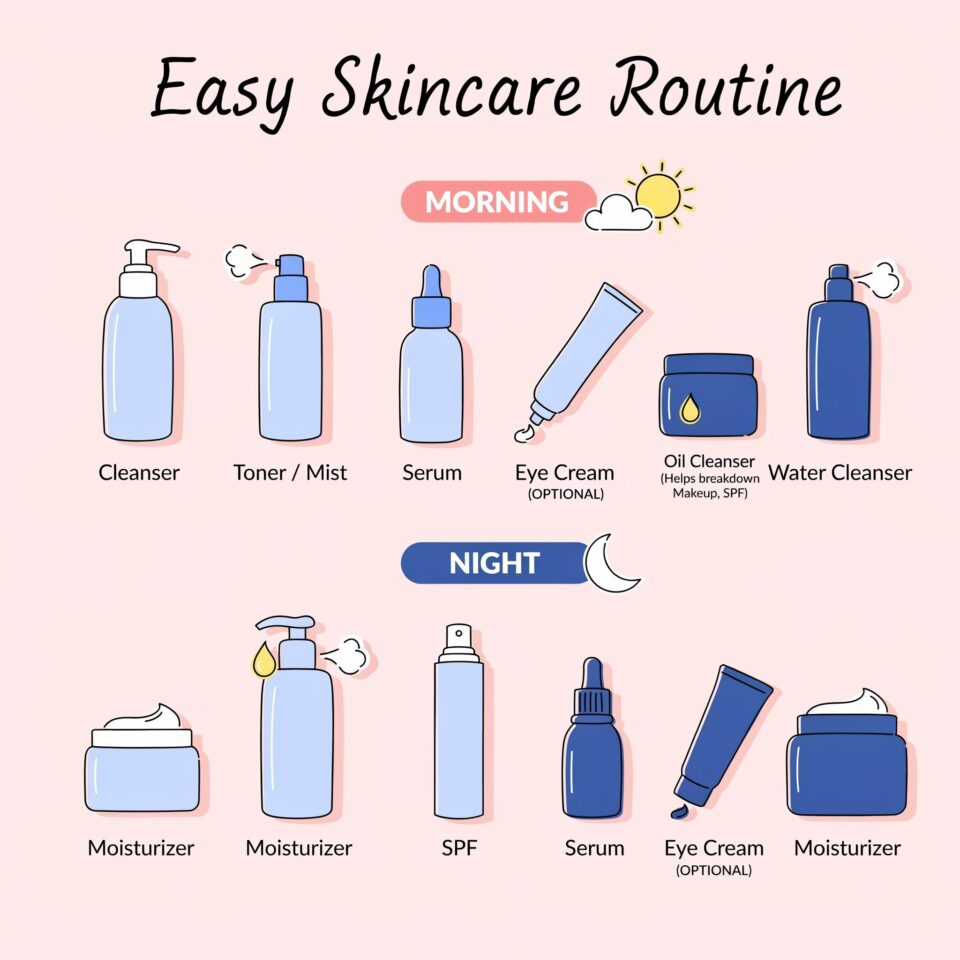
The fix is simple: use an oil based cleanser first to dissolve sunscreen and makeup, then follow with a water based cleanser. This double cleanse method ensures your skin is truly clean without stripping it. If you are short on time, even a micellar water on a cotton pad as a first step works well.
- Oil cleanser or balm – melts away SPF and makeup
- Gentle foaming or cream cleanser – removes remaining dirt and sweat
- Lukewarm water only – hot water strips natural oils
Mistake 2: Applying Active Ingredients in the Wrong Order
Texture matters. Thinner, water based products should go on first, then thicker creams and oils. When you layer a heavy moisturizer before a serum, that serum cannot penetrate and ends up wasted. I have seen people put retinol over a thick night cream and then complain it did not work.
Stick to the thin to thick rule: toner, serum, eye cream, moisturizer, then facial oil if you use one. For actives like retinol or vitamin C, apply them directly onto clean, dry skin before your moisturizer to maximize absorption and minimize irritation.
Mistake 3: Overdoing Exfoliation Every Single Night
More exfoliation does not mean faster results. Scrubbing or using chemical exfoliants nightly can damage your skin barrier, leading to redness, flaking, and sensitivity. I made this mistake when I first discovered glycolic acid and ended up with a sore, blotchy face that took weeks to heal.
Limit physical scrubs to once a week and chemical exfoliants (like AHAs or BHAs) to two or three times per week on non consecutive nights. On off nights, focus on gentle hydration and barrier repair. Your skin needs downtime to rebuild, not constant peeling.
Mistake 4: Loading Up on Too Many Products at Once
It is tempting to layer a serum, an essence, an ampoule, a cream, and an overnight mask. But too many ingredients can irritate or cancel each other out. I used to pile on five or six products, and my skin looked dull because nothing could properly absorb.
Simplify. Pick a maximum of three active steps: a treatment (like a retinol or niacinamide serum), a moisturizer, and an optional occlusive (like a sleeping mask or oil). Rotate treatments rather than stacking them. Your skin will thank you, and you will actually see which product is helping.
Mistake 5: Forgetting Your Neck and Décolletage
Your nighttime skincare routine should not stop at your jawline. The neck and chest show aging just as much as your face, but many people skip them entirely. I used to ignore mine until I noticed horizontal lines forming that did not match my face.
Bring all of your products down to your collarbone. Use the same cleanser, serum, and moisturizer on your neck. For retinol or acids, start with every other night because neck skin is thinner and more sensitive. A small investment in extension goes a long way for a cohesive look.
Mistake 6: Using the Wrong Pillowcase Material
Cotton pillowcases absorb moisture and product from your skin, plus they create friction that can cause sleep lines and breakouts. I switched to a silk or satin pillowcase and noticed less creasing in the morning and fewer blemishes on my cheek area where I usually rest my face.
Silk or satin pillowcases reduce friction and help your skincare stay on your skin where it belongs. They also keep your hair from getting greasy or tangled. Wash your pillowcase at least once a week to prevent bacteria buildup. It is a cheap change that pays off quickly.
Mistake 7: Sleeping with Your Hair and Hands on Your Face
Even with a perfect routine, touching or pressing your face against your hands or hair while sleeping transfers dirt and oil. I used to tuck my hair behind my ears and then push my face into the pillow, waking up with breakouts along my hairline and chin.
Pull your hair back loosely with a soft scrunchie before bed. Avoid sleeping with your hands tucked under your face. If you tend to roll onto your side, try a beauty pillow with a cutout to keep your face off the fabric. Small positioning changes can prevent a lot of irritation.
Getting your nighttime skincare right does not require a cabinet full of fancy products. It mostly means avoiding these common pitfalls: double cleansing when needed, layering correctly, not over exfoliating, keeping
Leave a Comment